Gearless
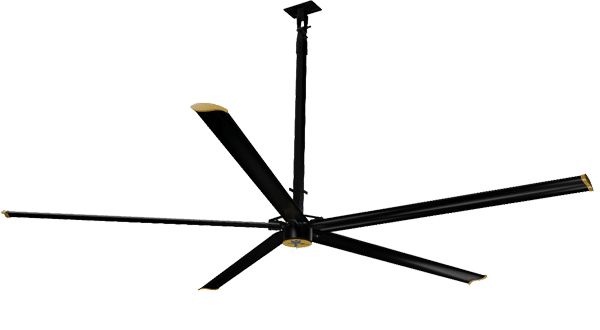
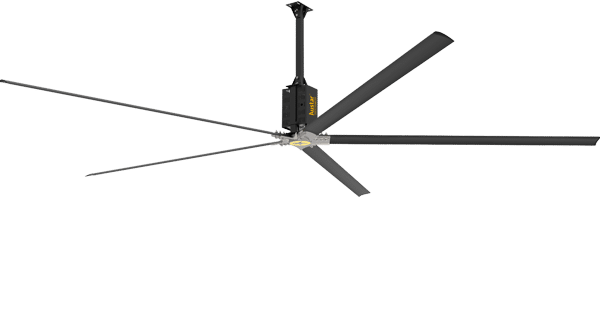
Gearless 20 Feet HVLS Fan
- Diameter
- 20 ft
- Air Delivery
- 410,000 CFM
- Coverage
- up to 16,000 sq.ft.
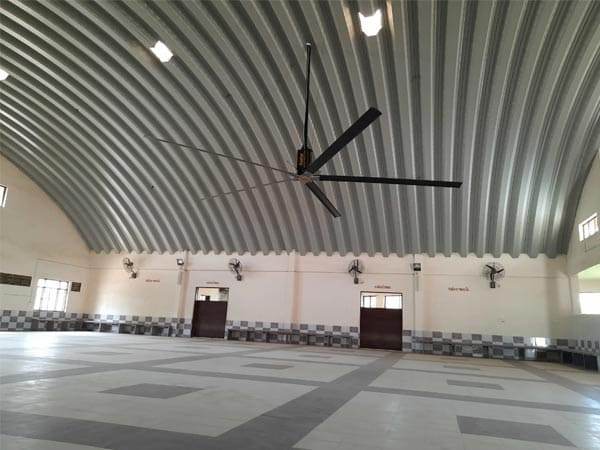
These are the hardest spaces to cool conventionally — very high ceilings, large volume, and occupancy that goes from empty to full within minutes. Running HVAC for that pattern is expensive and slow to respond. Conventional ceiling fans at that height are ineffective, and the ones mounted lower are noisy enough to interfere with prayer, speeches and acoustics.
One large HVLS fan covers what dozens of conventional fans would, quietly and from a height that keeps the hall visually clear. The gearless range runs below 40 dB, so the acoustic character of the hall is unaffected. Because the response is immediate — the fan reaches full effect within a minute of switching on — the hall can be brought to comfort as it fills rather than being conditioned for hours in advance. Running cost for a few hours a week is a fraction of any alternative.
Typical selections for this facility type. Final size and quantity come out of the feasibility study once we have your roof height and layout.
Gearless
Gearless
Geared
No — a high ceiling is ideal for HVLS. The fan hangs on a drop rod to the correct working height, which is designed as part of the hanging structure.
Gearless models run below 40 dB, which is well under normal speech level. This is the main reason they are specified for these halls.
Air movement is effective within about a minute of starting, so the hall can be brought to comfort as people arrive rather than conditioned in advance.
Yes. Custom colour finishes for the blades, hub cover and drop rod are available.
Industry is pre-selected. Add your dimensions and we come back with a fan size, a quantity and a layout drawing.
Send us the basics and our team will respond within one working day.
Give us your shed bay by bay and we come back with a fan size, a quantity and a layout drawing — no charge, no obligation.
Measure each bay on its own — length, width, and roof height from the floor to the underside of the truss. Then take two or three photos looking straight up at the roof, so we can read the roof type and the hanging arrangement.